Charcoal Placement Explained: Get Better Results Every Time You BBQ
One of the biggest secrets to great charcoal barbecue cooking isn't the barbecue itself – it's how you arrange your charcoal.
Whether you're grilling burgers, cooking a whole chicken or slowly smoking a rack of ribs, the way you position your charcoal controls the temperature and determines whether you're cooking with direct or indirect heat.
Here's a simple guide to the most popular charcoal layouts and when to use each one.
Direct Heat Cooking
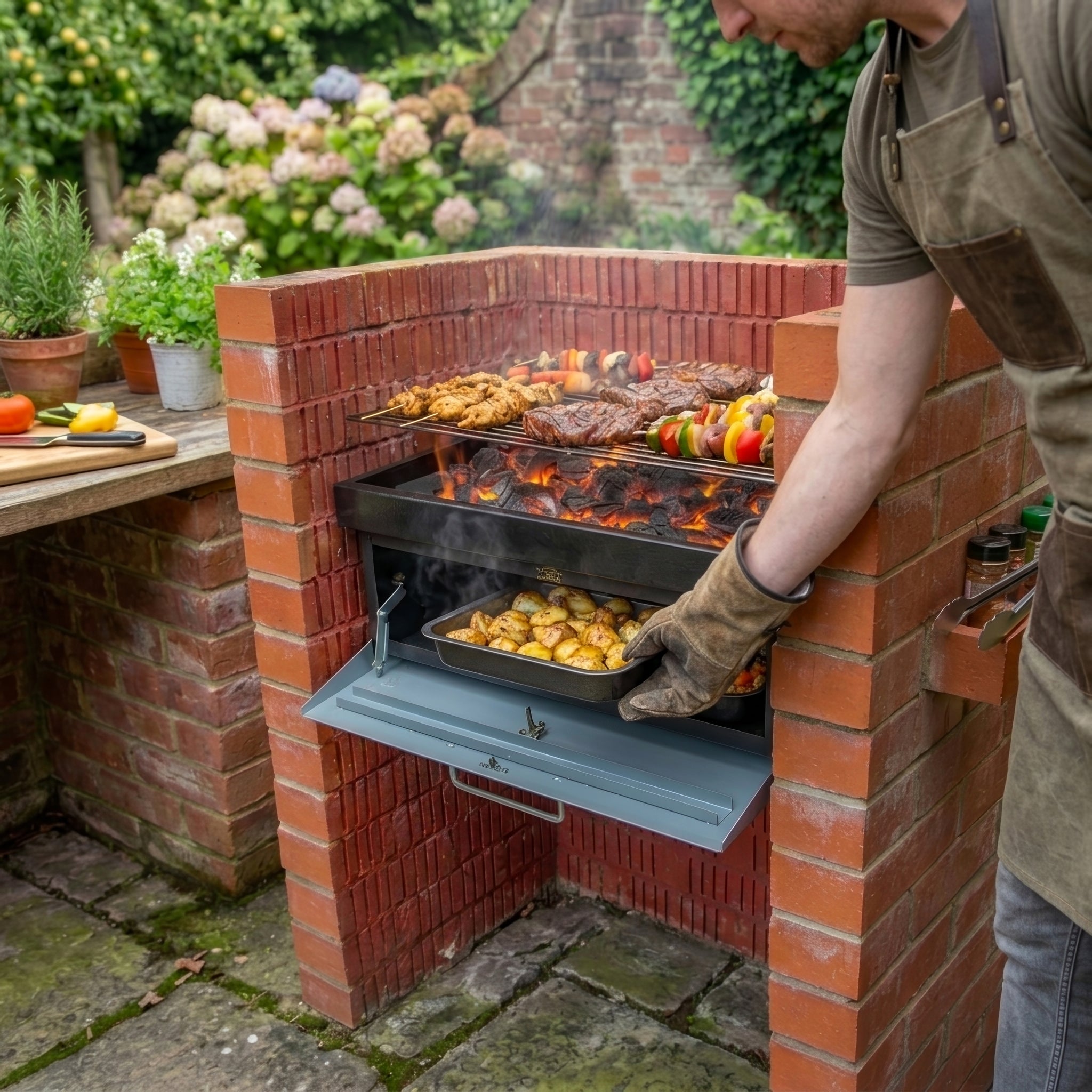
Direct heat means your food is cooked directly above the hot coals.
This method produces high temperatures, giving food those delicious grill marks while sealing in flavour. It's perfect for foods that cook quickly.
Best for:
- Burgers
- Steaks
- Sausages
- Chicken breasts
- Kebabs
- Vegetables
- Fish fillets
Flat Charcoal Bed
The simplest setup is spreading your charcoal into an even layer across the base of your barbecue.
This creates consistent heat across the entire cooking area, making it ideal when you're cooking plenty of food at once.
Advantages:
- Even cooking temperature
- Large cooking area
- Perfect for family barbecues
- Easy to manage
Indirect Heat Cooking
Indirect cooking works more like an outdoor oven.
Instead of placing food over the charcoal, the coals are positioned to one or both sides, with the food sitting away from the direct heat. The barbecue lid is closed so hot air circulates around the food.
This slower cooking method keeps meat juicy while allowing larger cuts to cook evenly without burning.
Best for:
- Whole chickens
- Roasting joints
- Pork shoulder
- Beef brisket
- Ribs
- Larger vegetables
- Baking pizza or bread
The 50/50 Method (Two-Zone Cooking)
One of the most useful charcoal arrangements is the 50/50 method, also known as two-zone cooking.
Simply pile all of your charcoal onto one half of the barbecue, leaving the other half empty.
This gives you two completely different cooking zones:
Hot Zone (Direct Heat)
- High temperature
- Perfect for searing
- Great for fast cooking
Cool Zone (Indirect Heat)
- Gentle cooking
- Ideal for finishing thicker foods
- Prevents flare-ups and burning
This setup gives you complete control. You can sear a steak over the hot coals before moving it to the cooler side to finish cooking to perfection.
It's also invaluable when cooking chicken, allowing you to crisp the skin before gently cooking the meat through without drying it out.
The Snake Method
If you're planning a long cook, the snake method is one of the most efficient charcoal arrangements.
Charcoal briquettes are arranged in a semi-circle or complete ring around the edge of the barbecue, with only a few lit briquettes at one end.
The fire slowly burns its way around the "snake", providing consistent temperatures for many hours without needing to constantly add more fuel.
Perfect for:
- Low and slow barbecue
- Pulled pork
- Brisket
- Spare ribs
- Smoking
Typical cooking temperatures range between 110–135°C, making this an excellent technique for authentic barbecue.
The Minion Method
Popular with kettle barbecues and ceramic grills, the Minion Method involves placing a small number of lit charcoal briquettes on top of a larger pile of unlit charcoal.
The lit coals gradually ignite the surrounding charcoal, maintaining a steady cooking temperature for several hours.
This method is ideal for:
- Smoking
- Long roasting sessions
- Overnight cooks
- Kamado cooking
Direct vs Indirect Heat at a Glance
| Direct Heat | Indirect Heat |
|---|---|
| Food directly over charcoal | Food away from charcoal |
| High temperatures | Lower, controlled temperatures |
| Fast cooking | Slow cooking |
| Creates grill marks | Even roasting |
| Lid can be open or closed | Lid should remain closed |
Which Method Should You Choose?
If you're cooking burgers and sausages for friends, a flat charcoal bed is simple and effective.
For thicker steaks or chicken, the 50/50 method gives you much greater control and helps avoid burnt outsides with undercooked centres.
If you're cooking a whole chicken or a Sunday roast, switch to indirect heat and let your barbecue work like an outdoor oven.
And if you're ready to try authentic low-and-slow barbecue, experiment with the snake or Minion methods for beautifully tender smoked meats.
Top Tips for Better Charcoal Cooking
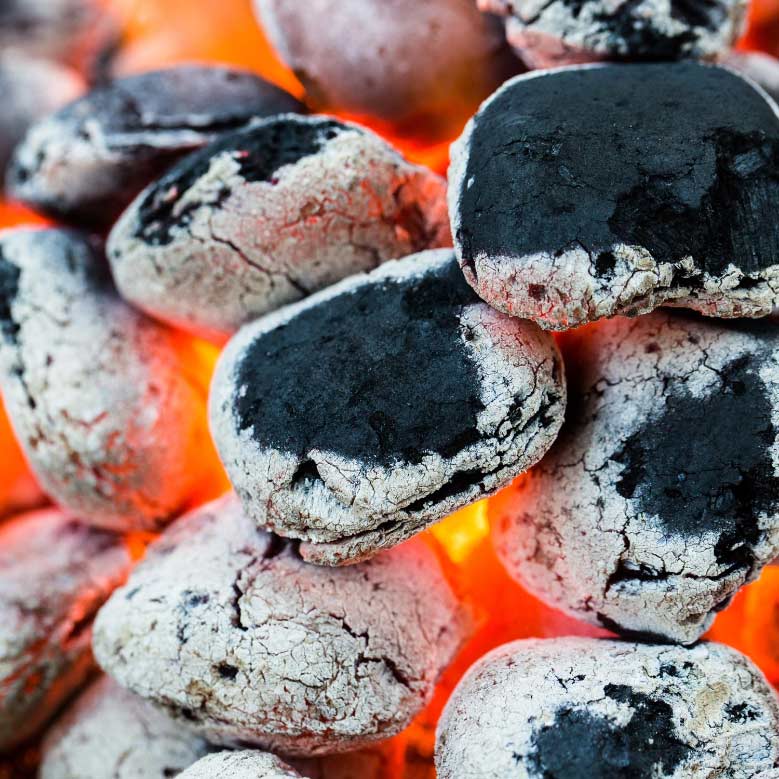
- Allow charcoal to ash over before cooking – this usually takes around 20–30 minutes.
- Keep the barbecue lid closed during indirect cooking to maintain an even temperature.
- Use quality lumpwood charcoal for high heat and quick cooking, or charcoal briquettes for longer, more consistent burns.
- Adjust the air vents to control temperature rather than constantly moving the charcoal.
- Always keep one cooler cooking zone available whenever possible – it gives you much greater control over your barbecue.
Master Your Fire, Master Your BBQ
Understanding charcoal placement is one of the quickest ways to improve your barbecue skills. By choosing the right charcoal layout and knowing when to use direct or indirect heat, you'll cook more evenly, reduce flare-ups and achieve better flavour every time.
Whether you're grilling a few burgers on a summer evening or smoking a brisket for hours, the fire you build is just as important as the food you cook.