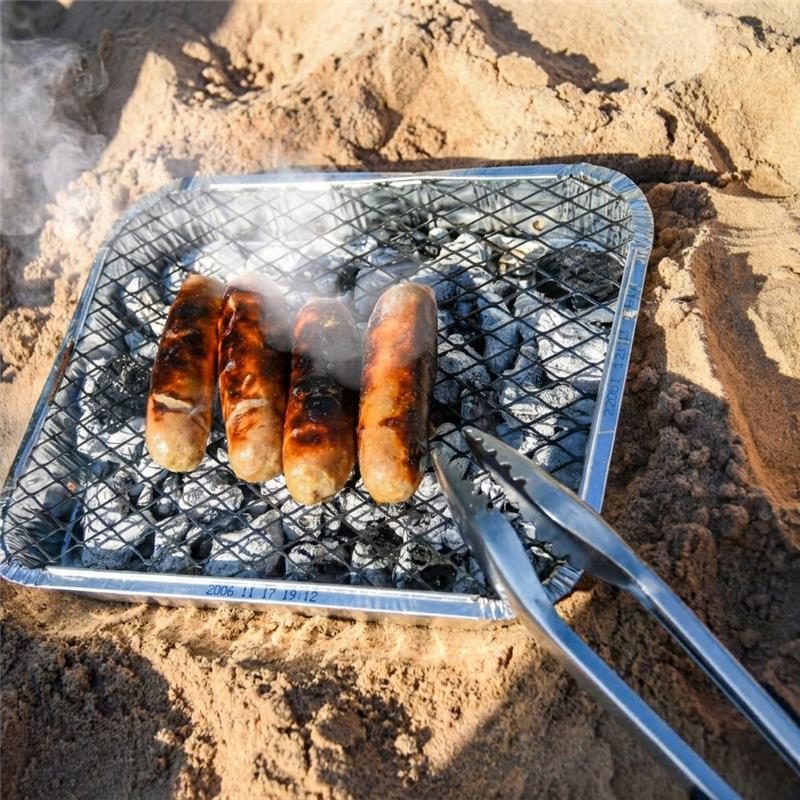
Seaside Safety
Seaside Safety’ campaign is being run during the summer season to educate us all on the safe ways of using an Instant Barbecue on a public beach.
We all know that there is nothing better than to head to the coast for a barbecue on a sunny day. Wind in your hair, sea lapping at your feet and the amazing smells drifting up from your barbecue, but all to often some people can forget the potential dangers of unsafe disposal of the units after they have finished eating.
Here’s some do’s and don’ts to help stay safe.
• DON’T bury the barbecue in the sand. Sand can act as in insulator not an extinguisher, it can become extremely hot creating hazardous temperatures for unsuspecting feet.
• DO extinguish with sea water and allow to cool completely
• DON’T Leave cooling barbecues unattended.
• DO dampen the sand with sea water where the barbecue has been sitting. The sand underneath the barbecue can reach a dangerous 400 degrees centigrade
• DON’T Leave the used barbecues on the beach. Always take your rubbish with you, if left to wash away the barbecues can become harmful to our marine animals.
• DO pick up the cooled unit and either take to the nearest bin or take home with you.
Once used…
Extinguish the barbecue completely with water/seawater and allow it to fully cool. Don’t bury the barbecue in the sand as the sand acts as an insulator, not an extinguisher, reaching high temperatures when in contact with the barbecue. A hazardous temperature for unsuspecting feet! Once fully cooled, dispose of the barbecue responsibly. Pour more water over the sand where the barbecue has been sitting to ensure this area has returned to a safe temperature.

Written by Charles Powiesnik